How Diesel Smog Checks Work & Why They’re Different From Gas Vehicles

June 29, 2026

Your registration renewal showed up in the mail, and right there in the fine print is the line you were hoping to avoid: smog certification required. You drive a diesel, maybe a three quarter ton pickup for towing or a work van that has hauled tools for years, and now you are picturing your truck strapped to a machine while a technician revs the engine and stares at the tailpipe. Here is the part most diesel owners do not expect: that picture is wrong. A diesel smog check does not work the way a gas inspection does, and it rarely involves the tailpipe gas sampling people brace themselves for.


When we run a diesel through a smog check, we are mostly reading what the truck already knows about itself. The engine computer has watched its own emissions hardware for thousands of miles, and our job is to plug in, confirm those self checks are finished, verify the emissions equipment is present and unmodified, and watch for heavy smoke during a quick rev. No rollers. No probe up the pipe. After inspecting hundreds of diesels, we can tell you the ones that fail almost always fail for reasons you can spot and fix before you pull into the bay.

What Actually Happens During a Diesel Smog Check

A diesel smog check comes down to four things, and not one of them is a tailpipe emissions reading. We connect a scan tool to the diagnostic port under your dash and pull the data the engine computer has stored. We confirm the onboard monitors have finished their self tests. We do a hands on visual inspection of the emissions components to make sure everything that left the factory is still there and unaltered. And we run a brief smoke check, revving the engine to see whether it throws out excessive black soot. That is the whole inspection, and it leans almost entirely on what the truck reports, not anything measured at the pipe.

Why There Is No Tailpipe Test for Your Diesel

The tailpipe sniffer was built for gasoline, not for diesel exhaust. A traditional gas analyzer measures hydrocarbons, carbon monoxide, and oxides of nitrogen, all tuned around how a gasoline engine burns fuel. Diesels burn differently. They run lean, they produce soot rather than that same gas mix, and the equipment controlling their emissions lives in the exhaust system as physical hardware. So instead of sampling the gas, we verify the hardware is intact and let the engine computer tell us whether its emissions systems are doing their job. The computer is the witness, and the smoke check is the backup that catches a truck dumping soot even when the data looks clean.

The Readiness Trap That Fails Healthy Trucks

The single most common reason a perfectly healthy diesel still fails is not ready monitors. Your engine computer runs internal self tests called readiness monitors, and it only finishes them after the truck has been driven through a mix of cold starts, highway speed, steady cruising, and idle. If the battery was disconnected recently, or someone cleared codes to chase a problem, those monitors reset to not ready. Roll in before they finish and the system reports that it is not done checking itself, which is an automatic no pass. We see this constantly with trucks serviced or given a fresh battery the week before. Some stored faults also will not clear by unplugging the battery. They clear only once the computer confirms the original problem is gone, so erasing codes the night before rarely works the way people hope.

How a Diesel Smog Check Differs From Gas

The biggest difference is what the inspection trusts to judge your vehicle. A modern gas car and a modern diesel both lean on the onboard computer and a visual check, so on the surface they look similar. Older gas vehicles, built before the computer took over testing, still get the rollers and the tailpipe probe. Your diesel never does. Diesels also face a dedicated smoke check, since soot is the signature diesel pollutant and a gas analyzer would never catch it. The parts differ too. On a diesel we confirm the particulate filter, the device that traps soot before it leaves the exhaust, has not been gutted or swapped for a straight pipe, and that the exhaust gas recirculation system is intact, since it is one of the most tampered with parts on older diesels. Nobody checks a gas car for any of that. Same idea, different evidence.

What Makes a Diesel Fail, and How to Get Ahead of It

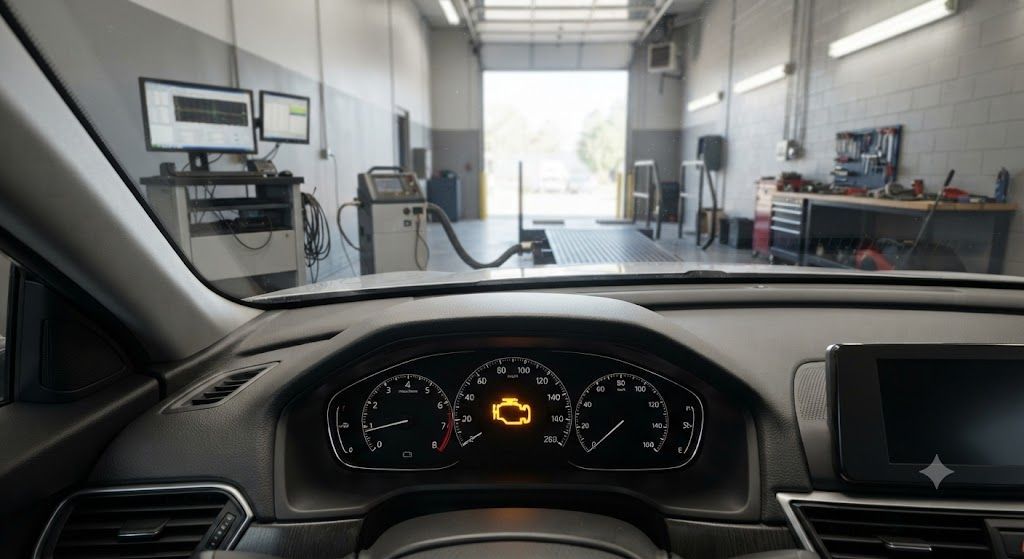
Most diesel failures trace back to three things, and all three are preventable. The first is a check engine light. If it is on, the inspection is over before it starts, because the computer is telling us an emissions system is unhappy, so sort out that fault first. The second is unfinished readiness monitors, and the fix is simply driving the truck through a normal week of mixed highway and city miles before you come in. The third, the one we have to turn people away for most often, is emissions tampering. Deleted filters, race tunes, and intakes that strip out factory hardware all show up clearly, both in the scan data and in the bay. If your truck was modified by a previous owner, you may not know until it fails, and putting it back to its factory emissions setup is the only path through.

TIP: A week before your appointment, take your diesel on a thirty minute highway drive at steady speed and leave the battery connected. That run lets the particulate filter burn off built up soot and gives the readiness monitors time to finish, which clears the two most common reasons healthy trucks get turned away.

How Local Driving Conditions Play Into It

The way you drive out here works against a clean pass more than you might think. Long, hot freeway hauls and heavy towing load up a particulate filter fast, while constant short trips never get the exhaust hot enough to burn that soot off, so the filter clogs and the computer throws a code. Dry, dusty air is hard on intake filters and sensors, which feeds bad readings to the system. Heat ages batteries quickly too, and a weak battery swapped right before a smog check is the classic way drivers end up with reset monitors and a failed test.

Frequently Asked Questions

  • How long does a diesel smog check take?

    Most diesel inspections wrap up in roughly fifteen to twenty minutes once your truck is in the bay, assuming the readiness monitors are complete. If the system reports not ready, we cannot finish, so the real time depends entirely on how recently you drove it.

  • Will a deleted diesel pass a smog check?

    No. When emissions hardware like the particulate filter or recirculation system has been removed or disabled, both the scan data and the visual inspection catch it right away. Returning the truck to its factory emissions configuration is the only way to earn a passing result.

  • Is it safe to drive my diesel with the check engine light on?

    A steady light usually means an emissions fault you can drive on briefly, but a flashing light signals active engine damage happening right now, so stop and get it looked at soon. Either way, that light guarantees a failed inspection until the fault gets fixed.

  • Why does my diesel keep failing for readiness monitors?

    Your engine computer needs a full mix of driving before its self tests finish: cold starts, highway speed, and steady cruising. A recent battery disconnect or cleared codes resets everything, so you simply drive normally for several days before you come back in to retest.

  • Does towing or short trips affect my diesel smog check?

    Yes. Heavy towing and frequent short errands in hot, dusty conditions pack the particulate filter with soot it never burns off, which eventually trips a code. A longer highway run at steady speed a day beforehand lets the filter clean itself and helps you pass.

Local Diesel Smog Specialists Who Know Your Truck

The whole diesel smog check rests on one idea: the inspection trusts what your truck reports about itself, so a clean pass starts with finished readiness monitors, an honest check engine light, and emissions hardware that is all present and unmodified. Out here that gets harder than the statewide norm, because long hot freeway miles, constant towing, and dry dusty air push diesel filters and sensors to their limit and leave more trucks tripping codes before they ever reach the bay. For more than 40 years, Tri-City Smog has handled exactly these inspections for diesel owners across Temecula, California & Menifee, California. Bring your truck to us, let us read what it is telling us, and we will tell you straight whether it is ready to pass or what it needs first. Call us to schedule your diesel smog check.

Red sports car with rear wheel spinning on icy pavement, spraying snow or smoke.
May 18, 2026
California has long been at the forefront of air quality regulation, implementing stringent measures to reduce vehicle emissions. Among these measures is the STAR Program, which plays a critical role in monitoring and controlling pollution levels across the state.
Underside of a car with white exhaust smoke billowing from the tailpipe near the rear tire
April 25, 2026
Air pollution continues to be one of the most pressing environmental challenges, particularly in regions with heavy vehicular traffic and dense populations. Automotive emissions contribute a significant portion of harmful pollutants, including nitrogen oxides (NOx),
A mechanic wearing black gloves inserts an emissions testing probe into the exhaust pipe of a car in a repair shop.
March 26, 2026
Maintaining a vehicle isn’t just about ensuring it runs smoothly—it’s also about ensuring it meets environmental standards. Smog checks are an essential part of vehicle ownership, particularly in states with strict emissions regulations.
Red sports car with rear wheel spinning on icy pavement, spraying snow or smoke.
May 18, 2026
California has long been at the forefront of air quality regulation, implementing stringent measures to reduce vehicle emissions. Among these measures is the STAR Program, which plays a critical role in monitoring and controlling pollution levels across the state.
Underside of a car with white exhaust smoke billowing from the tailpipe near the rear tire
April 25, 2026
Air pollution continues to be one of the most pressing environmental challenges, particularly in regions with heavy vehicular traffic and dense populations. Automotive emissions contribute a significant portion of harmful pollutants, including nitrogen oxides (NOx),
A mechanic wearing black gloves inserts an emissions testing probe into the exhaust pipe of a car in a repair shop.
March 26, 2026
Maintaining a vehicle isn’t just about ensuring it runs smoothly—it’s also about ensuring it meets environmental standards. Smog checks are an essential part of vehicle ownership, particularly in states with strict emissions regulations.