Check Engine Light On Before a Smog Check? Why It's an Automatic Fail
July 21, 2026
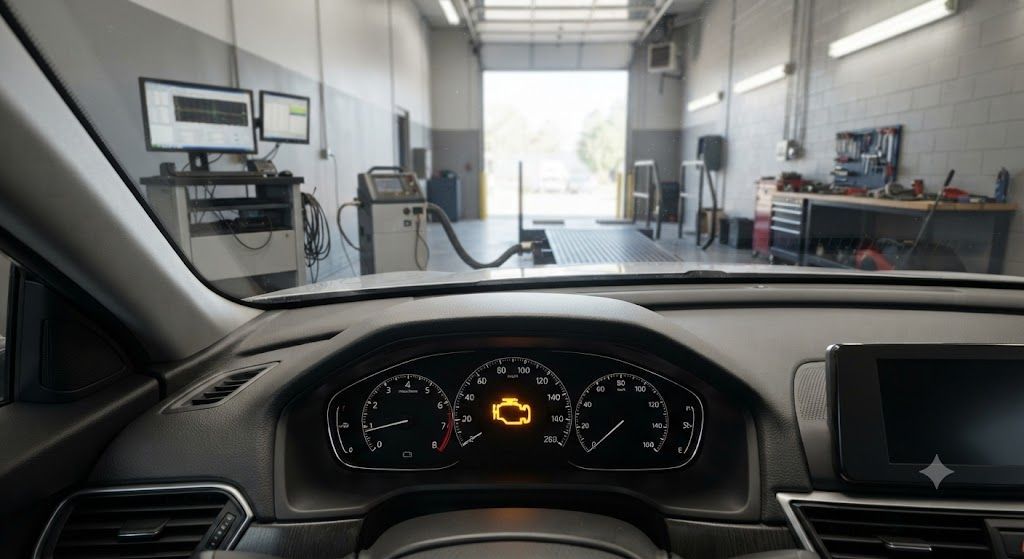
Quick Answer: If your check engine light is on when you pull in for a smog check, the vehicle fails automatically, no matter how well it drives. The light is your car's own emissions computer reporting a problem it has detected, and the smog inspection reads that same computer. The fix is not to hide or clear the light right before your appointment but to have the underlying issue diagnosed and repaired, then drive the car enough for its self-tests to finish so it can pass on its own.
You have your registration renewal notice sitting on the counter, the appointment is set, and then you notice it: that little amber engine symbol glowing on the dash. Maybe it has been on for weeks and you have been ignoring it, or maybe it just popped up on your way to the shop. Either way, a lot of drivers around the Temecula Valley pull in hoping the car will squeak through anyway because it starts fine and drives fine.
Here is the part nobody wants to hear. In California, a check engine light that is on during the inspection is an automatic fail. It does not matter how smooth the engine feels or how new the tires are. The test is not judging how the car drives. It is reading the car's own emissions computer, and that light is the computer waving a flag. Let me walk you through exactly why that happens, what the machine is actually looking at, and how to handle it so you pass without wasting a trip.
Why a Lit Check Engine Light Means an Automatic Fail
The check engine light is not a general "something is off" warning. It is tied directly to your car's emissions system, and that connection is the whole reason it decides your result.
What the light really is
Every 1996-and-newer gas vehicle and every 1998-and-newer diesel carries a standardized onboard computer called OBD II. It watches the engine and emissions controls, and when it detects a fault that could raise tailpipe emissions, it stores a trouble code and turns on the malfunction indicator lamp, your check engine light.
Why the inspection reads it as a fail
A modern smog check is an electronic conversation with that OBD II computer. The inspector connects to the diagnostic port and asks three things: is the warning lamp commanded on, are there stored codes, and have the self-tests finished. If the lamp is commanded on while running, the vehicle fails.
Why "it drives great" does not matter
Plenty of faults that trigger the light have nothing to do with how the car feels. A lazy oxygen sensor, a small evaporative leak, or a catalytic converter slowly losing efficiency will not make the engine stumble, yet each raises emissions. That is why a smooth-running car can still fail.
What the Smog Machine Actually Looks At
It helps to know what the inspector's equipment checks, because it explains why you cannot talk or tinker your way past a glowing dash.
The bulb check comes first
The system first confirms the warning lamp works. With the key on and engine off, the lamp should illuminate, proving the bulb and circuit are intact. Once running, it should go dark. A lamp still commanded on with the engine running is the automatic fail.
Stored trouble codes
The computer keeps a record of the specific faults it has found, written as diagnostic trouble codes, and the inspection pulls that data. These codes are what a repair shop uses to zero in on the misfire, sensor, evaporative system, or catalytic converter behind the problem.
Readiness monitors
Your OBD II system runs internal self-tests, called readiness monitors, to confirm each emissions component works. During normal driving, they quietly run and switch to "complete." If too many still read "not ready," the car cannot be certified even when the light is off.
TIP: If your light has been on for a while, jot down anything you have noticed, such as rough starts, a rattle, a recent fill-up where the gas cap clicked oddly, or a dead battery you jump-started. Those small details help a technician match the stored trouble codes to a real cause faster, so you spend less time chasing the wrong repair.
The link between all three
When a genuine repair is done correctly, the trouble code clears, the readiness monitors run and complete during driving, and the light stays off on its own. That is the natural sequence the inspection is designed to reward. Anything that shortcuts it tends to show up as a different failure instead.
Why Clearing the Code Right Before You Test Backfires
The most common move drivers try is borrowing a code reader or disconnecting the battery to make the light disappear on the way to the shop. It feels clever. It almost always makes things worse.
Erasing the light does not erase the problem
Clearing codes only turns the lamp off temporarily. The underlying fault is still there, so the computer detects it again and relights the dash, often within a few days. Even if it stays off until your appointment, you are not clear, because of what clearing memory does to your self-tests.
You wipe out your readiness monitors
The moment you clear codes or disconnect the battery, all those internal self-tests reset to "not ready." Now the car must be driven through a full range of conditions before the monitors run again and switch to complete. Show up before that happens and you fail for incomplete readiness instead.
Permanent codes close the loophole
On 2010-and-newer vehicles, the system stores a permanent trouble code when it flags an emissions fault. A scan tool cannot erase it, and neither can pulling the battery. It clears only after the computer verifies the repair actually worked, generally after about 15 warm-up cycles and 200 miles of driving.
Warning: Do not remove or unplug the dash bulb to hide the light. The inspection specifically verifies the warning lamp illuminates during the key-on bulb check, so a lamp that never lights up flags the vehicle rather than helping it slip through. It also strips you of the one dashboard signal that tells you an emissions problem is happening in the first place.
What to Do When the Light Is On Before Your Appointment
The good news is that handling this correctly is simple, and it saves you the frustration of a wasted inspection and a repeat trip.
Get the codes read and the cause fixed
Have the stored trouble codes pulled and, more importantly, the actual fault diagnosed. A code points toward a system, not the exact broken part, so proper diagnosis prevents throwing parts at the car. Common culprits include oxygen sensors, the evaporative system and gas cap, misfires, and an aging catalytic converter.
Drive it so the car can prove itself
After the repair, the light should stay off, but the car still needs to run its readiness monitors to completion. That takes a mix of city and highway driving, cold starts and warm running, spread across a few days. Once the monitors read complete, the vehicle is genuinely ready now.
Time it with your renewal in mind
Because a repair plus a proper drive cycle can take several days, deal with the light before your registration deadline is breathing down your neck. A week or two of cushion means a diagnosis, a fix, and enough driving all fit comfortably before you need the certificate. Plan that buffer.
Bring it in warmed up and ready
When the light is genuinely off and the car has been driven, come in with the engine warm, ideally after 15 to 20 minutes of driving. A warm, fully running engine with completed monitors is exactly what the inspection wants to see, giving you the cleanest shot at passing first.
Frequently Asked Questions
Will my car really fail with the check engine light on even if it runs perfectly?
Yes. The inspection reads your emissions computer, not your driving impression. If that computer commands the warning lamp on, the car fails automatically. Many faults never affect how it feels but still fail.
Can I just clear the light with a code reader before I come in?
You can, but it backfires. Clearing codes resets your readiness monitors to "not ready," and the car fails for incomplete monitors. On 2010-and-newer vehicles, a permanent code also stays stored until repair is verified.
How long do I need to drive after a repair before testing?
Enough for the readiness monitors to complete, usually a variety of driving over a few days rather than one short trip. Rushing in the same afternoon you clear codes is the most common failure reason.
What if the light turns off by itself before my appointment?
If it cleared because the condition resolved and the monitors have since completed, the car may pass. But a self-clearing light often returns and can leave monitors unfinished. Confirm the issue was actually fixed.
Does disconnecting the battery help me pass?
No. It clears the light but wipes every readiness monitor, so the car shows "not ready" and fails on that basis. It does not remove a permanent code, and it erases useful diagnostic data.
The light is on but I have no idea why. What now?
Start with a diagnosis. Having the trouble codes read tells you which emissions system is involved, and a technician can confirm the cause. Once repaired and driven enough, the light stays off itself.
Handling the Light the Right Way
A check engine light before a smog check is not the disaster it feels like, but it is also not something you can outsmart at the last minute. That amber glow is your car reporting an emissions problem through the same computer the inspection reads, which is why it means an automatic fail on its own. Hiding it, clearing it, or pulling the battery only trades one failure for another and erases the very information needed to fix the car. The path that actually works is the simple one: get the cause diagnosed, repair it, drive the vehicle until its self-tests finish, and let the car pass because it is genuinely healthy. Give yourself a little time before your registration is due and that whole process fits without stress.
Bring your car in with the light on and let us find out why before it costs you a wasted inspection. A lit check engine light means an automatic fail, but the fix starts with reading the codes, pinpointing the real emissions fault, and confirming the readiness monitors have completed before you test. Tri-City Smog
is a STAR-certified station serving Temecula and Menifee, California, with
40+ years of experience testing gas, diesel, hybrid, and every vehicle type, offering same-day and walk-in service and a 100% satisfaction guarantee, so schedule your inspection and get on the road to passing the first time.